The two-week MMGV26 International Summer School on Ground-induced Vibration Modelling and Vibration Mitigation successfully concluded at Fuzhou University on July 10. Co-hosted by the Laboratory of Structural Dynamics and Uncertainty Quantification and the Research Group on Sustainable Multi-hazard Resilient Bridges and Structures of Fuzhou University, together with the University Côte d’Azur of France, the summer school kicked off on June 29. It gathered young scholars and researchers in civil engineering from multiple countries. Adopting diverse forms including special lectures, group research projects, field study tours and result defenses, the event has built an international academic exchange platform for the prevention and control of ground vibration, delivering fruitful outcomes in professional teaching, cultural exchange as well as integration of industry and education.
Grand Opening on June 29: Diverse Sessions Kick Off an International Academic Journey
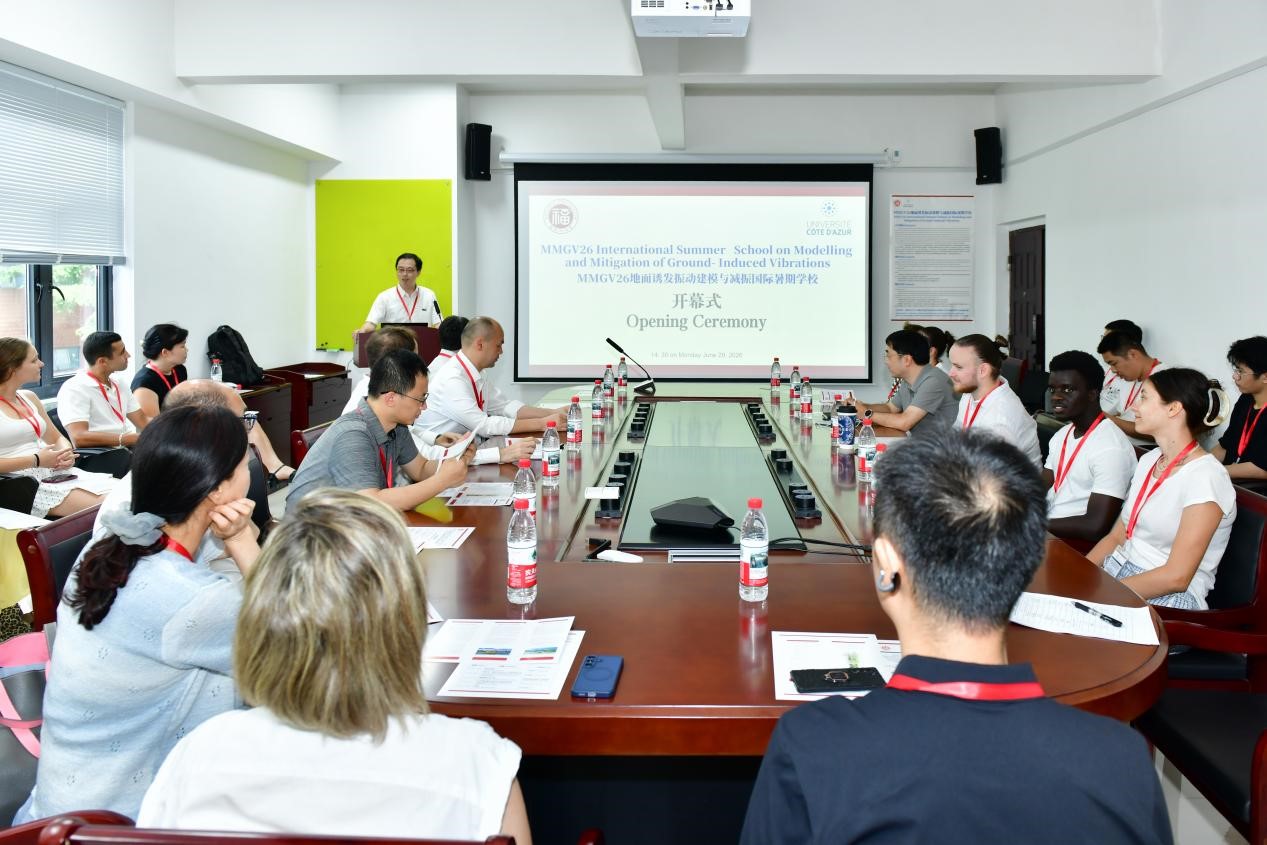
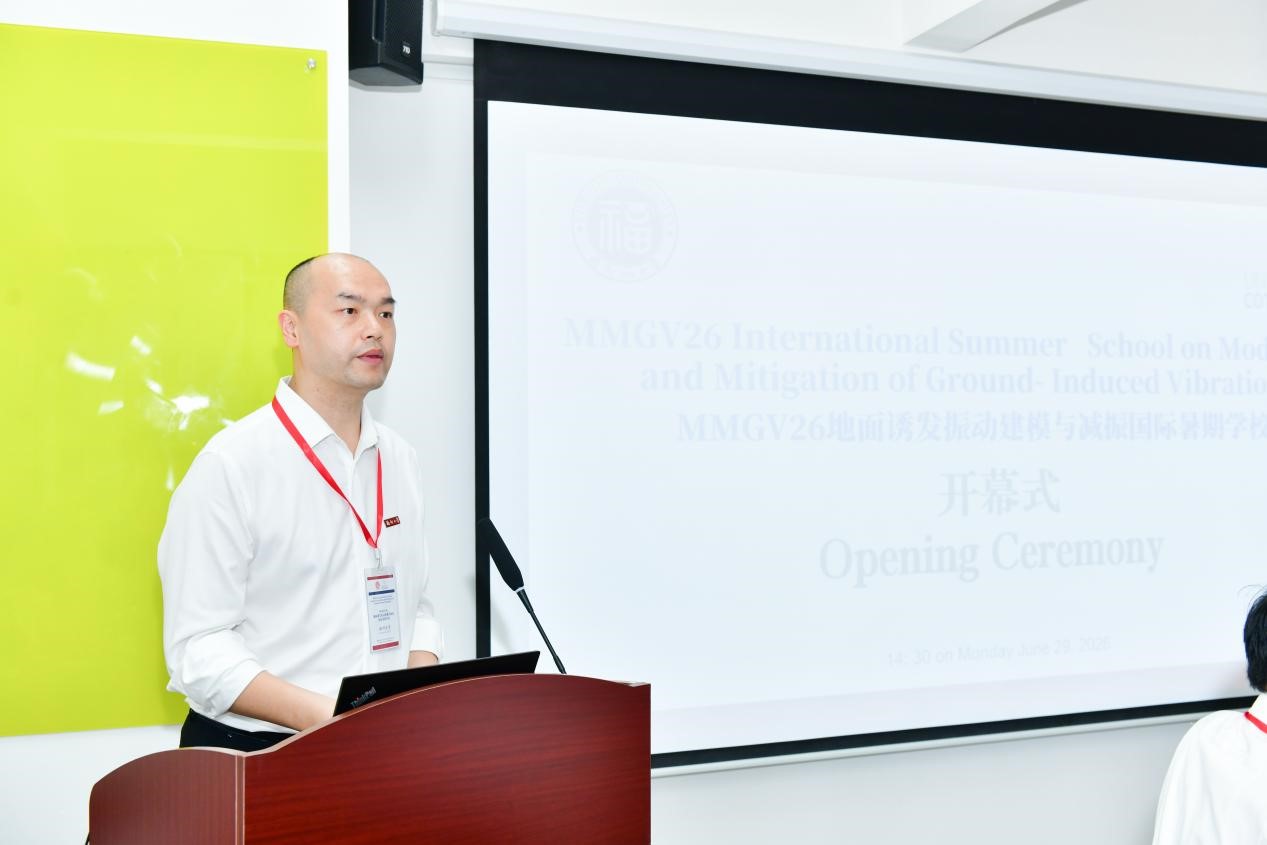
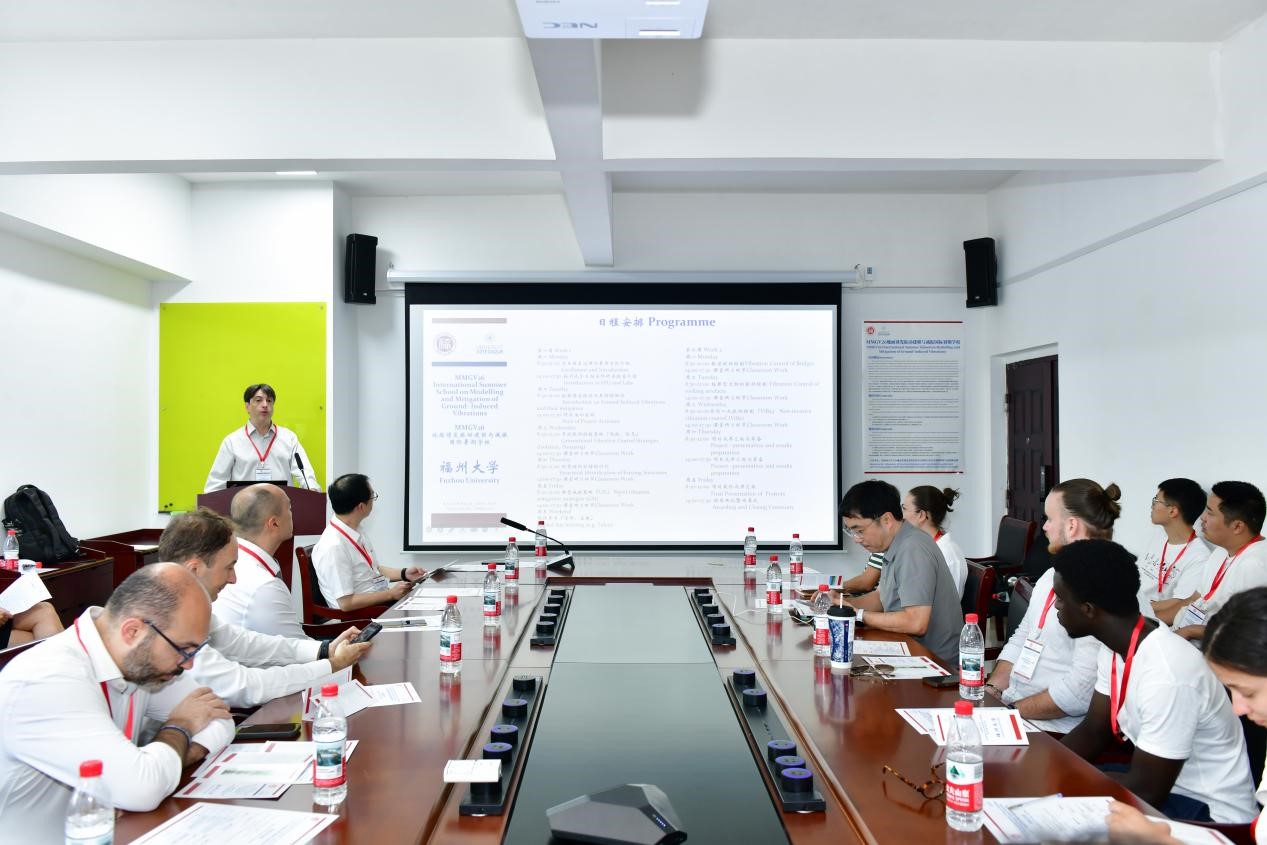
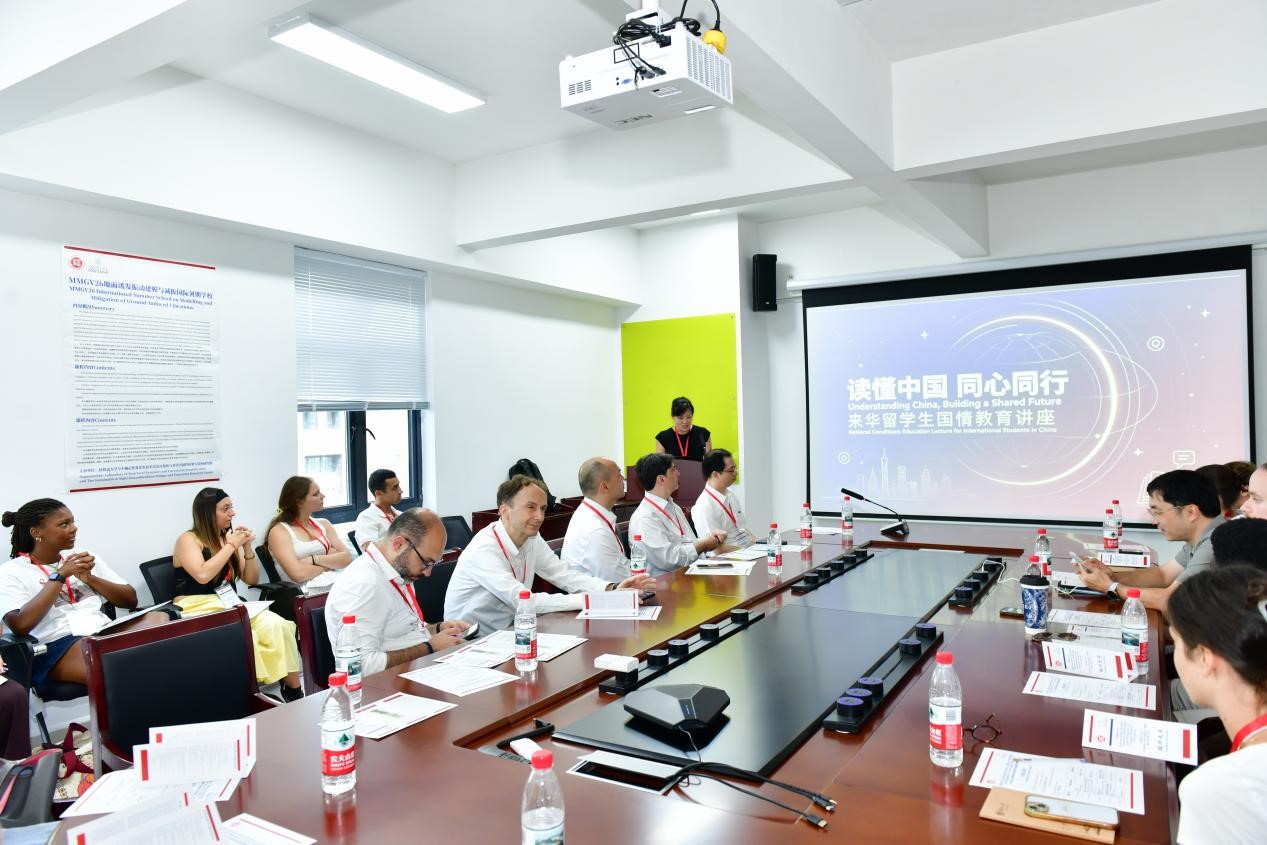
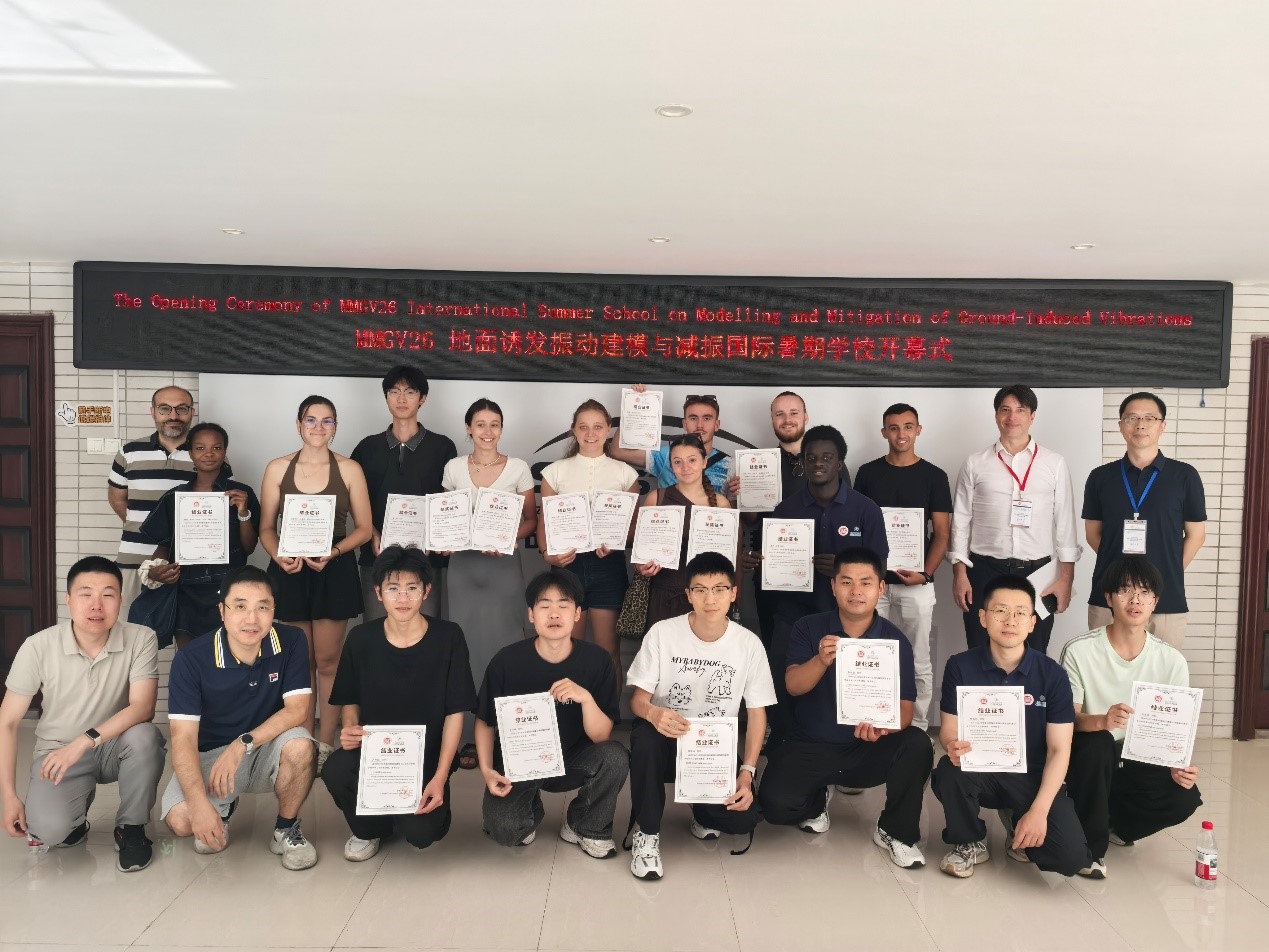
The opening ceremony of the summer school was held in the conference room of Building No.6, Fuzhou University Science and Technology Park on June 29. Researcher Yuan Huihui presided over the ceremony, and Deputy Party Secretary Wu Zhaohui delivered an opening address. A series of sessions followed, including briefings on the university overview and disciplinary development of the school, an introduction to the full agenda of the summer school, and ideological and political lectures for Chinese and international participants. All Chinese and foreign experts and trainees present took a group photo, officially launching this international research program. At the opening session, the co-organizer, Professor Pierfrancesco Cacciola, clarified that the summer school centers on challenging ground vibration issues, covering both conventional vibration mitigation technologies and cutting-edge solutions such as metamaterials and non-destructive vibration isolation. It adopts a mixed Sino-foreign group project-based teaching model to encourage young scholars from various countries to jointly tackle practical engineering problems.
Two Weeks of Progressive Systematic Teaching with Integrated Theoretical and Practical Training
The curriculum consists of two major teaching phases featuring daily specialized lectures and group studies to form a complete learning cycle.
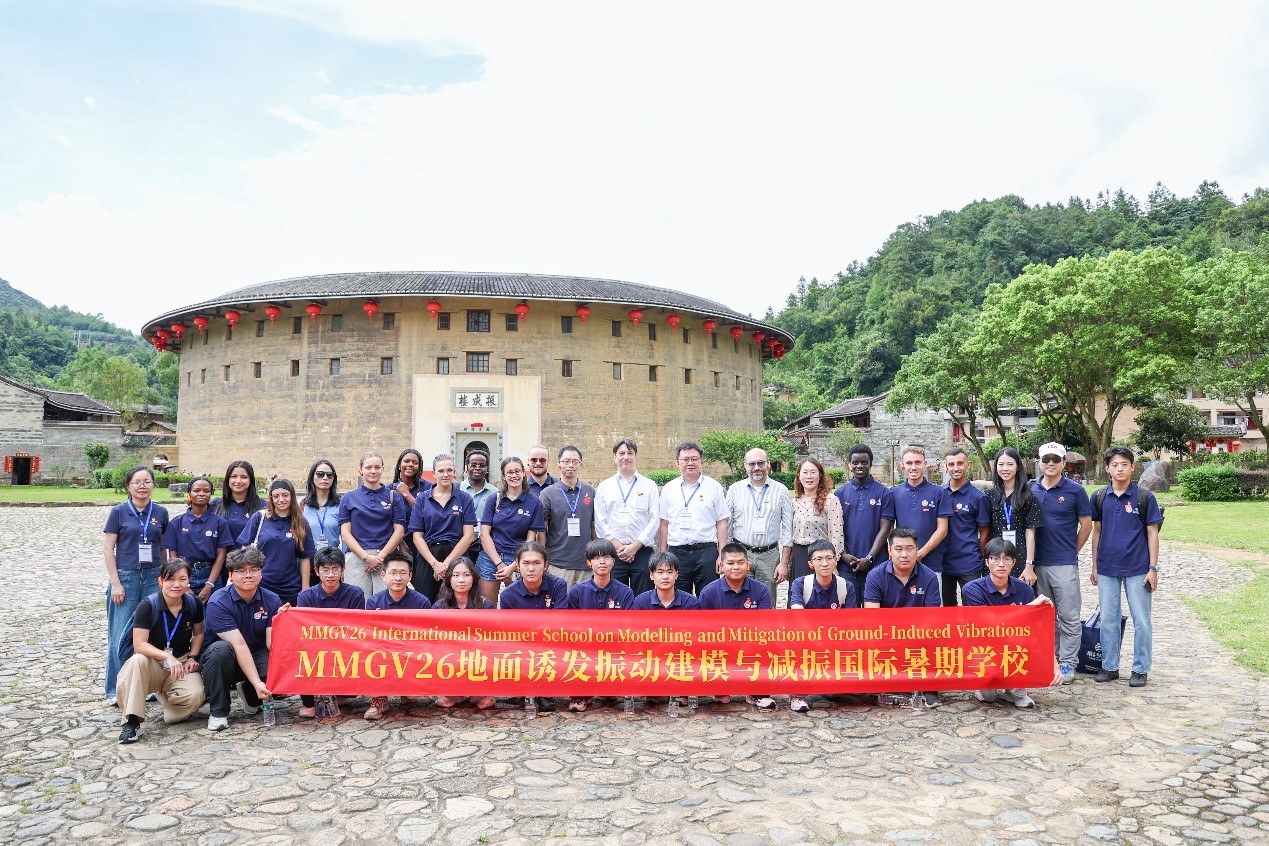
During the first week, participants completed registration and received systematic training on fundamental theories of ground vibration, mastering core knowledge including conventional vibration isolation and damping technologies, bridge vibration control, and structural identification of existing buildings, while launching the design of group research projects simultaneously. On July 5th, under the leadership of Party Secretary Wu Tangfeng of the school, all faculty and students embarked on a distinctive field study tour to Yongding, Longyan. They visited geotechnical engineering enterprises and the Zhencheng Tulou Cluster in Yongding, integrating classroom theories with the seismic resistance wisdom embodied in China’s traditional rammed-earth architecture and conducting on-site teaching on vibration protection for ancient buildings. During the field trip, foreign experts shared their research findings and introduced non-intrusive vibration mitigation technologies applicable to cultural heritage buildings. Chinese and foreign faculty and students held in-depth discussions on the natural vibration reduction mechanism of rammed-earth structures of tulou, turning this World Heritage Site into a mobile classroom for civil engineering.
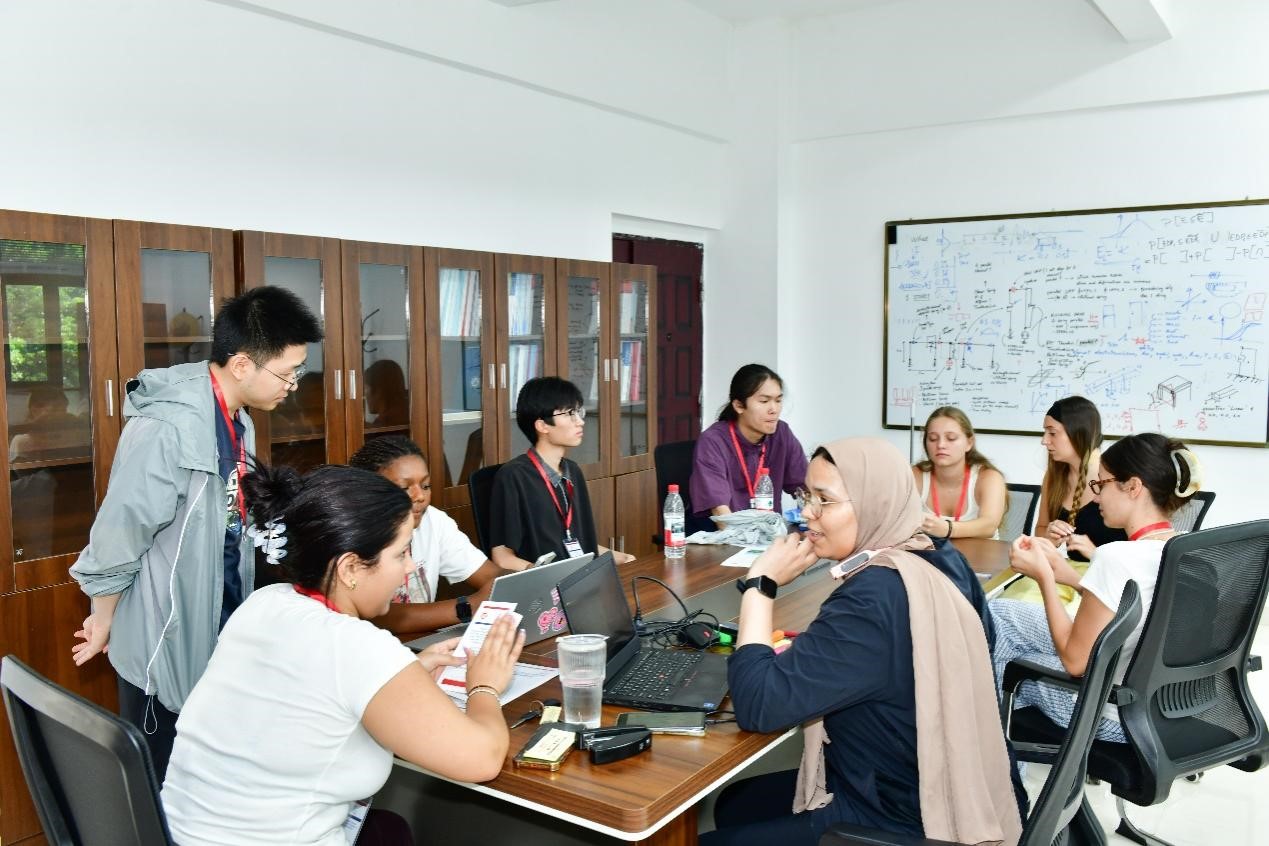
The courses in the second week focused on cutting-edge innovative industrial technologies, featuring special lectures on the innovative GSI vibration mitigation strategy, vibration control for rocking structures of cultural relics, and the non-destructive ViBa vibration control technology. With the support of computer-aided modeling tools, participants of each group kept refining their project proposals and completed a full set of design drawings, numerical simulation models as well as scaled physical models. On July 10, all groups delivered public defenses of their final project outcomes in sequence. Review specialists delivered comprehensive evaluations covering scheme innovation, structural safety and engineering practicability. Afterwards, an award ceremony and closing session were held, where honorary certificates were awarded to outstanding participants and top research teams, bringing the twelve-day academic program to a formal close.
Field Study on Tulou Stands Out: Integrating Traditional Construction Wisdom with Modern Vibration Mitigation Research
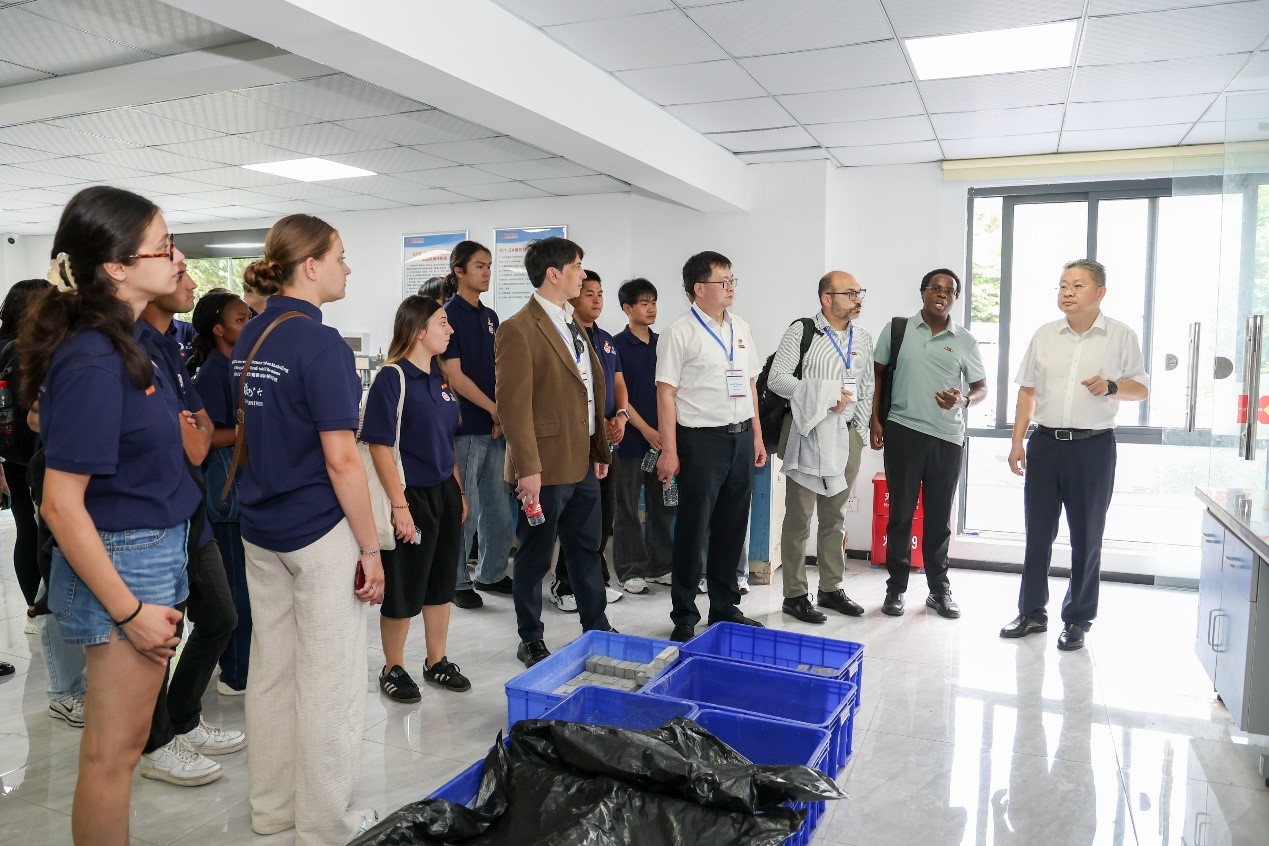
The distinctive practical field study of the summer school was held on July 5, with more than 40 Chinese and foreign teachers and students traveling to Yongding, Longyan for on-site teaching. The study group first visited a local high-tech geotechnical enterprise, toured its vibration mitigation research laboratory and overseas engineering application cases, and held a forum between the university and the enterprise focusing on rail transit vibration reduction, foundation reinforcement of ancient buildings and international talent training, reaching a letter of intent to jointly build a long-term practical field study base.
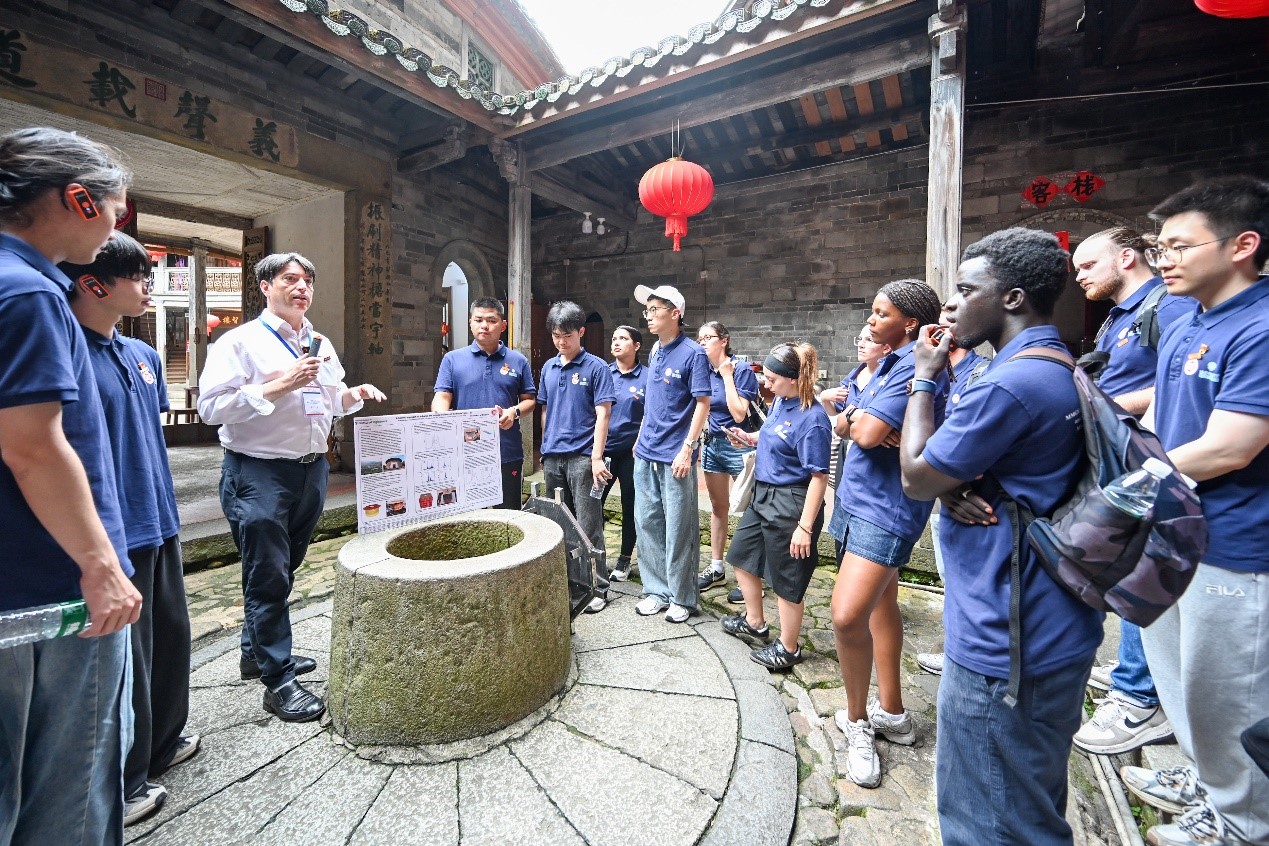
The group then visited the Hongkeng Tulou Cluster, a World Cultural Heritage Site, and conducted on-site inspections of the traditional structures of Zhencheng Building, including its Bagua layout, composite rammed-earth walls and raft pine wood foundation, to intuitively analyze the original construction concepts adopted by the Hakka ancestors to resist earthquakes and soil vibration. Professor Pierfrancesco Cacciola delivered special mini-courses on site, comparing modern non-destructive vibration mitigation technologies with the natural seismic resistance system of tulou, and discussing innovative vibration protection solutions that avoid damaging the main structures of ancient buildings. Young scholars from multiple countries all stated that this field study broke the limitations of textbook theories. Traditional rammed-earth buildings offer brand-new reference samples for global vibration control research and allow overseas young researchers to directly experience the charm of China’s traditional engineering science and technology.
Fruitful Achievements: Sino-French Joint Efforts Build an International Civil Engineering Education Model in Fujian
The summer school delivered three core outcomes. First, academically, more than ten complete vibration mitigation engineering design schemes were produced, covering various scenarios such as bridges, modern buildings and cultural relics. The numerical and scaled physical models completed by each group possess engineering reference value and deliver innovative ideas proposed by young researchers for the prevention and control of ground vibration. Second, in talent cultivation, a mixed Sino-foreign grouping model was adopted to break barriers in academic backgrounds, languages and cultures, cultivating young scholars’ capacity for cross-cultural collaborative research. Meanwhile, ideological and political lectures standardized norms for international academic exchanges, guiding young scholars to tell authentic stories of Chinese engineering during cross-border communication. Third, in terms of cooperation, the long-term research partnership between Fuzhou University and the University Côte d’ Azur of France was further deepened. Leveraging the regional feature of Fujian Tulou, a localized international teaching model combining classroom lectures, corporate practice and World Heritage field study was established.
Ground-induced vibration modelling and vibration mitigation constitute a universal key research topic in urban safety, transportation infrastructure and cultural heritage conservation. The two-week intensive study program of this summer school not only helped young researchers fill gaps in cutting-edge technical knowledge, but also promoted two-way cultural exchanges between China and foreign countries via civil engineering as a carrier. Moving forward, the two universities will regularly host annual international summer schools, jointly apply for research projects focusing on seismic protection of tulou and rail transit vibration mitigation, and rely on Fujian’s geographical advantages to generate more research achievements featuring both theoretical innovation and practical engineering value, so as to continuously develop a high-level international exchange platform for civil engineering disciplines.
All domestic and overseas participants expressed that they had gained abundant rewards over the two weeks. They systematically mastered cutting-edge industrial vibration mitigation technologies and built cross-border academic friendships. After the event concluded, Chinese and foreign participants will maintain continuous academic communication, carry forward the research ideas and cooperation intentions formed during the summer school into follow-up research work, and enable the achievements of this international academic exchange to take root and yield sustained results.
Relevant event coverage links are attached below:
1.https://m.chinanews.com/wap/detail/chs/zw/10653180.shtml
2.https://m.chinanews.com/wap/detail/chs/sp/10653489.shtml?params=eyJwbGF5TW9kZSI6InZlcnRpY2FsIn0=
3.http://epaperres.chinanews.com/epms/article/html/2026/07/07/1524001670021910528.html
4.https://www.52hrtt.com/ys/n/w/info/F1782885645862
5.https://www.33newsnz.com/static/content/xw/zgxww/2026-07-06/1523620039431953904.html
6.https://www.cntas.com.au/static/content/ZGXW/2026-07-06/1523767887994726816.html?utm_source=chatgpt.com
7.https://share.fjdaily.com/displayTemplate/news/newsDetail/1110/4234854.html?isShare=true&advColumnId=1110&linkV=1783484972000
8.https://share.fjdaily.com/displayTemplate/news/newsDetail/6732/4233091.html?isShare=true&advColumnId=6732&linkV=1783736831000
9.https://mp.weixin.qq.com/s/7WwG__shAtudOd7kosbAdQ
10.https://weixin.qq.com/sph/A2IRTgnqYn
11.https://ly.fjsen.com/wap/2026-07/07/content_32214519.htm
12.http://m.hxnews.com/news/jypd/gxzx/202607/08/2260546.shtml


