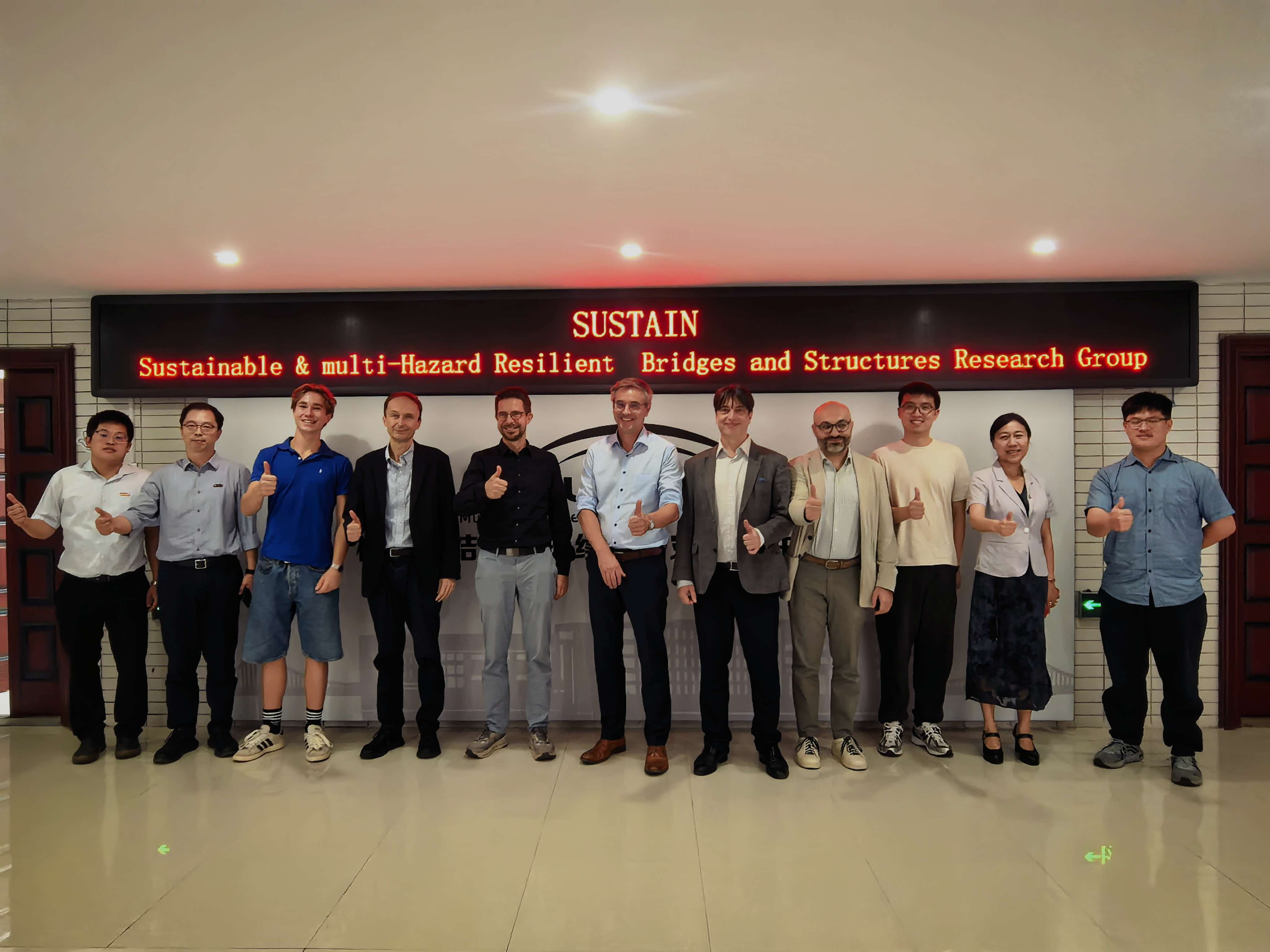
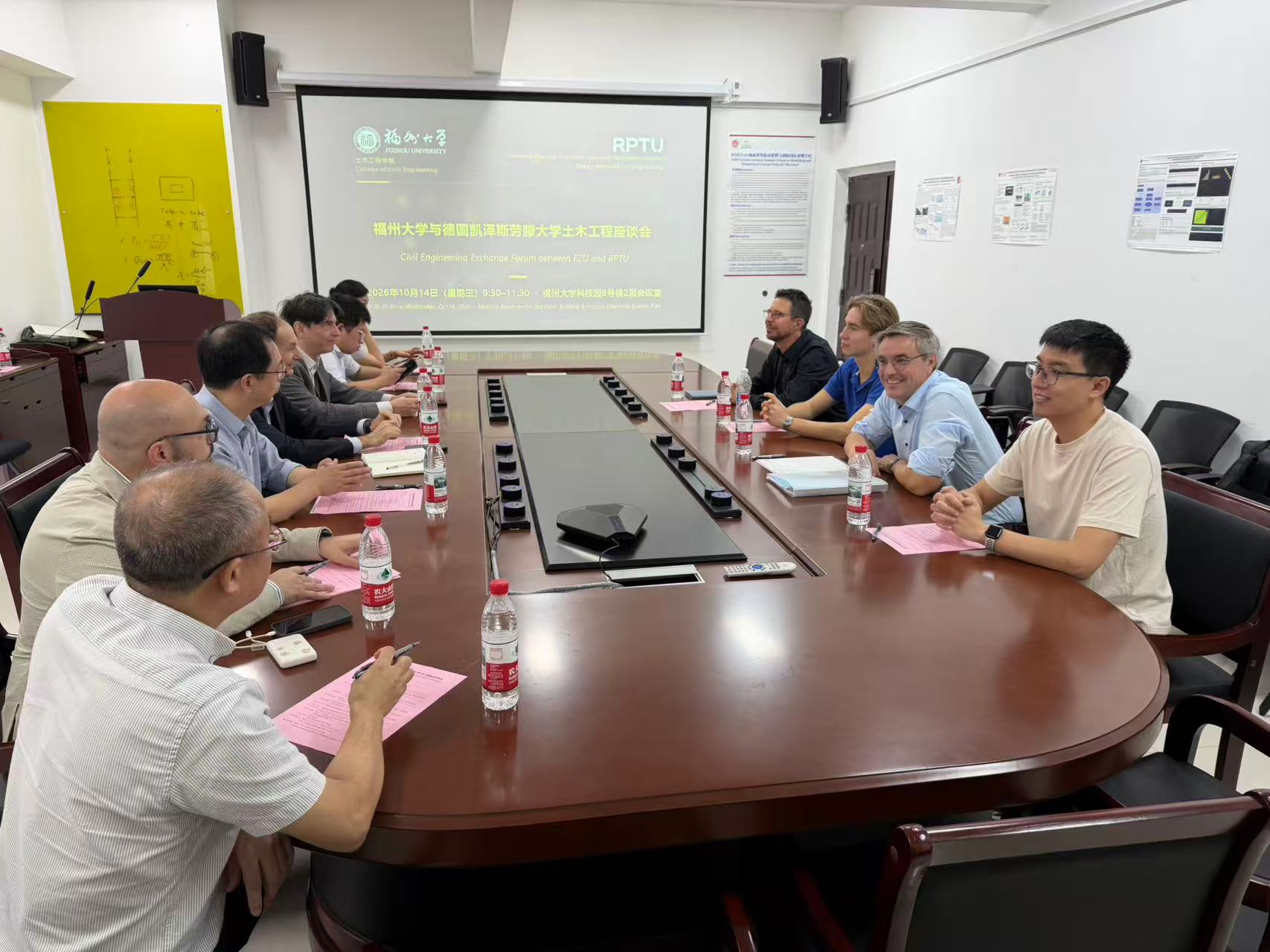
On the morning of October 14, the Civil Engineering Exchange Forum between Fuzhou University and RPTU University Kaiserslautern-Landau, Germany, was held in the meeting room of Building 6, Fuzhou University Science Park. Professor Oliver Frör, Vice President of RPTU, and other representatives of the German side exchanged views with Chinese and international faculty members and students of the College of Civil Engineering of Fuzhou University, and Professor Bruno Briseghella of the College delivered a welcome address. Focusing on discipline development, talent cultivation and frontier research, the forum aimed to deepen practical cooperation between the two universities in the field of civil engineering.
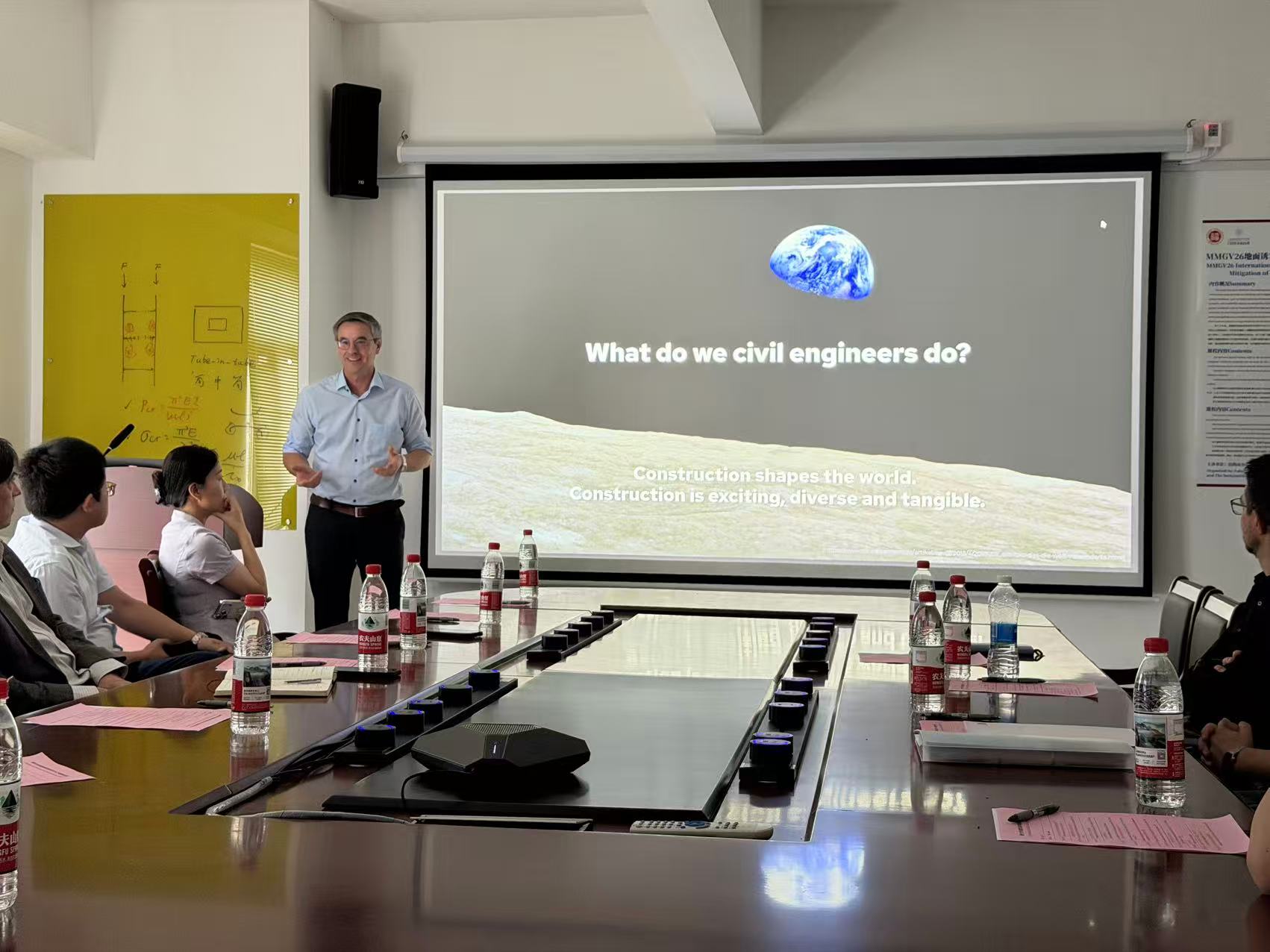
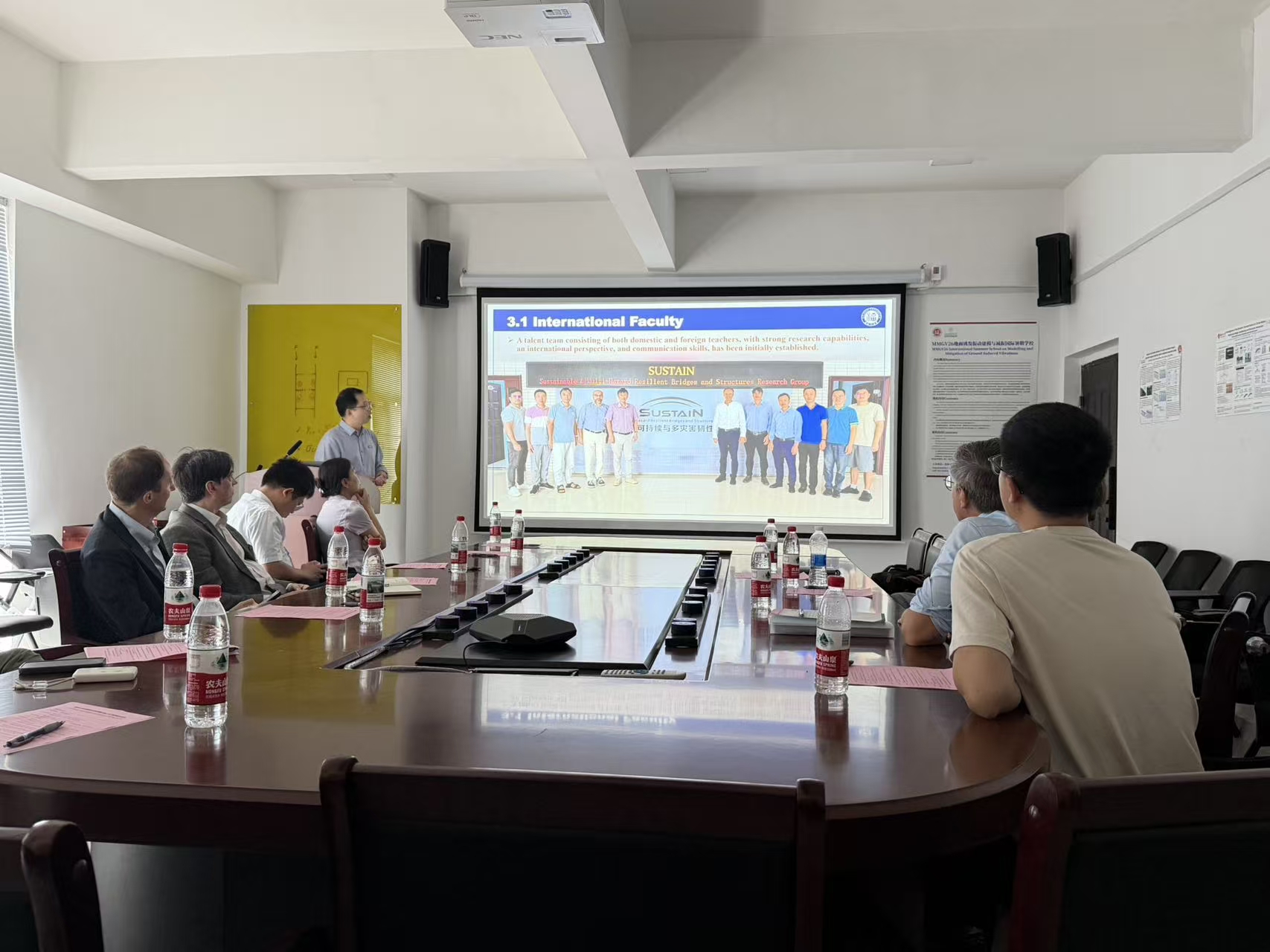
Professor Christian Glock introduced RPTU and its Department of Civil Engineering, including the department's research priorities and experimental facilities, which cover concrete and masonry structures, green and low-carbon construction, the reuse of existing buildings, and digitalization and artificial intelligence. Yuan Huihui, Research Fellow and Assistant Dean of the College, presented an overview of Fuzhou University and the College, covering their history, disciplinary layout, research platforms and outcomes in international cooperation. The College's civil engineering discipline has built a solid foundation in such fields as structural engineering, bridge and tunnel engineering, and disaster prevention and mitigation engineering, and has continued to make new progress in recent years in frontier areas including digital twins, intelligent construction and structural health monitoring.
The China-Germany “5+5” joint education program serves as an important bond of cooperation between the two universities in civil engineering. Launched in 2010, the program enables participating students to continue their master's studies at RPTU after studying in Germany. Dr. Wang Qu of the College and a PhD student representative from RPTU reported on the operation of the program. Faculty members and students exchanged experience on curriculum alignment, German language training, program duration and career development, and put forward ideas for new forms of cooperation, such as semester-long exchanges for master's students, joint supervision of graduate students and joint applications for research projects.
In the academic presentation session, four faculty members of the College shared their latest research. Research Fellow Liu Junping presented the application of concrete-filled steel tube (CFST) technology in long-span arch bridges, a technical system with Chinese characteristics that provides strong support for the construction of arch bridges with extremely long spans. Professor Pierfrancesco Cacciola reported on Vibration Barriers (ViBa), a seismic protection technology based on structure-soil-structure interaction that achieves passive vibration control without altering existing structures; the technology has been studied through numerical analysis, shaking table tests and engineering applications for heritage objects such as the Zoser Pyramid, the Fujian Tulou and the Zhaozhou Bridge, where the maximum structural stress was reduced by more than 20 percent. Professor Gu Yin presented research on multi-hazard risk assessment and resilience enhancement of bridges under extreme events, covering earthquake-tsunami sequences, scour and non-uniform corrosion, as well as strengthening technologies such as ultra-high-performance concrete (UHPC) and PVA-ECC. Professor Alessandro Contento reported on seismic assessment and protection strategies for rocking structures, providing new approaches to anti-overturning protection for artifacts, equipment and other rocking objects.
During the panel discussion and exchange, the two sides exchanged in-depth views on joint training, faculty visits, joint research and joint platform development, and reached preliminary consensus on expanding semester-long exchanges for master's students, joint supervision of doctoral students and joint applications for research projects.
RPTU University Kaiserslautern-Landau was established in 2023 through the merger of the former Technical University of Kaiserslautern and the University of Landau. As one of the key activities during the visit of the RPTU delegation, the forum further enhanced mutual understanding between the two universities in the field of civil engineering and laid a foundation for deepening cooperation in talent cultivation, scientific research, and faculty and student exchanges.