Ancient alleys preserve centuries of everyday life, while university laboratories embody the spirit of scientific innovation. On November 13, 2026, the College of Civil Engineering at Fuzhou University organized a study tour for international faculty and students to Lucheng District in Wenzhou as part of the Understanding China program. Using the old city's streets and lanes as a cultural classroom and a university laboratory as a practical learning site, the program integrated immersion in fine traditional Chinese culture with engineering study. It offered international faculty and students an experiential Chinese culture class that they could observe, experience, and relate to. During the tour, Chinese and international faculty and students explored historic streets, studied calligraphy and painting, and learned about scientific and technological innovation together. Their field visits deepened their understanding of a real and multidimensional China, while two-way exchanges helped build bridges for mutual learning among civilizations.
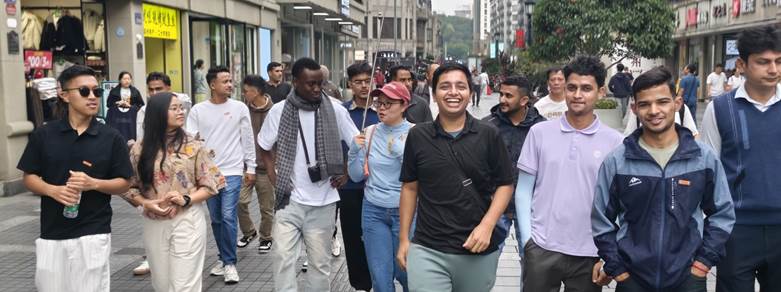
International students enter Wenzhou's old city with their guide.
Exploring Old Stone-Paved Streets and a Thousand-Year Urban Legacy
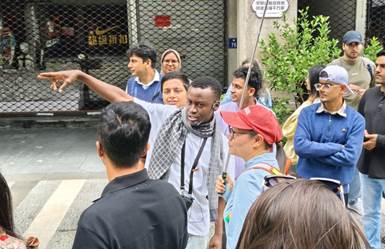
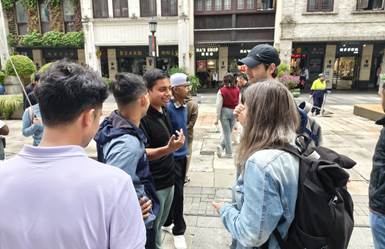
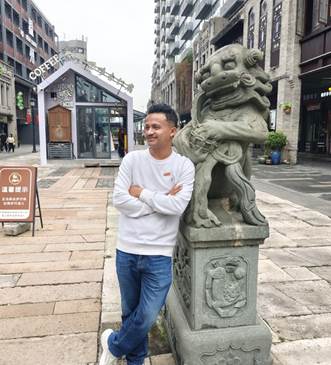
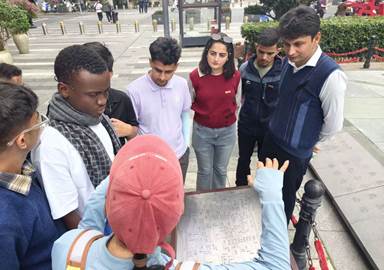
The ancient charm of Chan Street lies in its stone-paved lanes, timber window frames, and the signs of long-established shops. A weathered stone lion standing by the road seemed to welcome visitors as a witness to the passage of time. The group moved slowly along the street as Tang De, an international student from the College, provided a fluent Chinese commentary and joined the guide in explaining local stories and architectural features. International faculty and students stopped to observe at points of interest, gathering to exchange views when something caught their attention. Through these pauses, questions, and answers, their first impressions of Wenzhou's old city gradually took shape.
|
|
Left: Tang De and the guide explain the street; right: students exchange views by the roadside. |
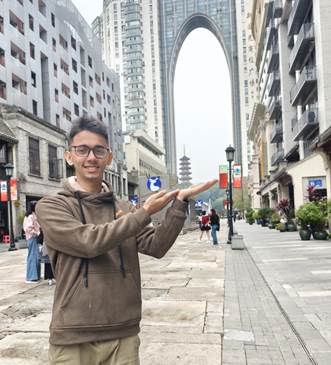
At a turn in the alley, an archway between buildings framed the Jingguang Pagoda on Songtai Mountain like a natural painting. An international student creatively raised both hands, using forced perspective to make the tiered eaves appear to rest in their palms and capturing the old city's distinctive charm through the camera. The photograph linked the long history of the ancient pagoda with the creativity of young students and offered a vivid example of cultural encounter and exchange.
|
|
Left: at the stone lions on Chan Street; right: using perspective to frame the Jingguang Pagoda on Songtai Mountain. |
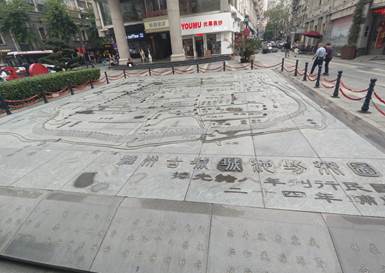
Entering Wuma Street, the group was drawn to the engraved ground map titled "Map of the Ancient City Walls, Wards and Lanes of Wenzhou." International faculty and students bent down to study it. On the stone surface, the ancient city walls formed a winding perimeter, while waterways threaded through the wards and lanes, clearly revealing the layout of historic Wenzhou. Looking up, they saw shops lining the street and pedestrians passing by, bringing the bustle of daily life into view. Beneath their feet lay the city's roots carved into stone; around them was the enduring vitality of ordinary life. The map connected past and present and helped the visitors understand that Chinese cities are not sealed historical specimens but living communities that continue to develop through inheritance. A cultural heritage spanning millennia remains part of everyday life.
|
|
Left: the guide explains the Map of Yongjia Commandery; right: the ground engraving of the Map of the Ancient City Walls, Wards and Lanes of Wenzhou. |
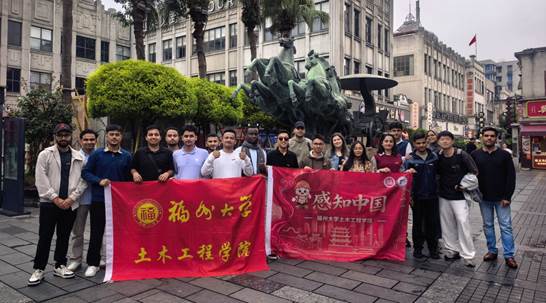
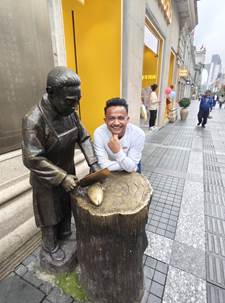
The "Five Galloping Horses" bronze sculpture tells the old legend behind the street's name, while the "Huadali Chopping Block" sculpture recalls the dedication of masters of Ou cuisine. International faculty and students stopped to take photographs and encountered Wenzhou's everyday vitality and cultural character through these street-side landmarks, gaining insight into the city's cultural traditions and craftsmanship rooted in daily life.
|
|
Left: group photo before the Five Galloping Horses bronze sculpture; right: the Huadali Chopping Block sculpture on Wuma Street. |
Reading Calligraphy and Painting in the Brush-and-Ink Tradition
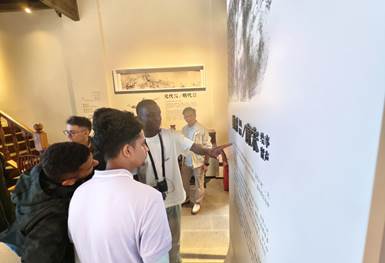
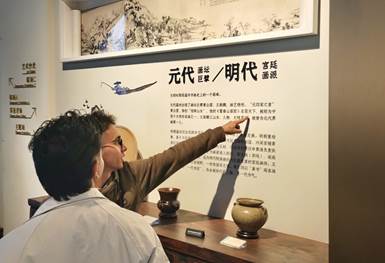
Leaving the busy market streets and entering the painting and calligraphy exhibition space, the group found the noise of the city receding, replaced by the fragrance of ink and a sense of antiquity. Exhibition panels traced the development of painting and calligraphy in Wenzhou during the Yuan and Ming dynasties. They introduced Huang Gongwang, foremost of the Four Masters of the Yuan Dynasty, who pioneered the qianjiang, or light-color, landscape style, and his renowned work Dwelling in the Fuchun Mountains; Wang Zhenpeng, renowned for jiehua, or ruled-line painting, and regarded as the leading jiehua painter of the Yuan Dynasty; and Jiang Ligang, whose calligraphy was celebrated throughout the country and who was a representative of the Taige style. These artists and their surviving works illuminated Wenzhou's cultural achievements and reflected the continuity of Chinese cultural heritage.
|
|
Left: Tang De talks with fellow students; right: international students read an exhibition panel on Yuan and Ming painting and calligraphy. |
International faculty and students slowed their pace, reading the exhibition texts closely and frequently pointing out details to discuss with one another. In the scroll paintings, layered rocks and distant shores unfolded through ink and brush, conveying a distinctively Chinese landscape aesthetic and philosophical outlook. In the display cases, celadon and writing materials reflected aesthetic sensibilities shaped over centuries. Having learned about the city's past and present in its streets that morning, the participants now entered a broader Chinese cultural and intellectual world, completing a cultural dialogue that transcended language through the silent medium of art.
This encounter with traditional Chinese painting and calligraphy made a profound cultural tradition tangible. It also helped international faculty and students understand that China's fine traditional culture is not confined to museum objects. It is a living cultural heritage and a bond that spans time and connects people around the world.
Visiting Research Facilities and Learning Engineering Craftsmanship
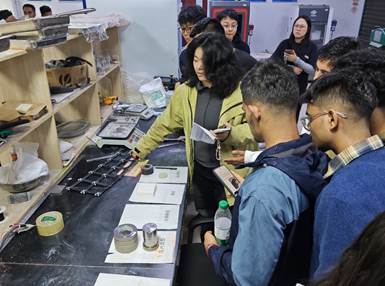
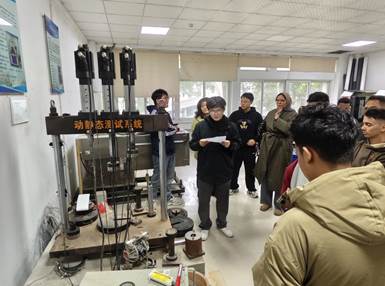
If the morning visit to the old city was a cultural class that enriched the mind, the afternoon laboratory visit was a practical class in professional rigor. The group went to the laboratory of the College of Civil Engineering and Architecture at Wenzhou University and exchanged views on materials preparation and mechanical property testing, gaining direct exposure to the rigor and innovative energy of engineering education in China.
|
|
Materials preparation display and an introduction to mechanical strength testing. |
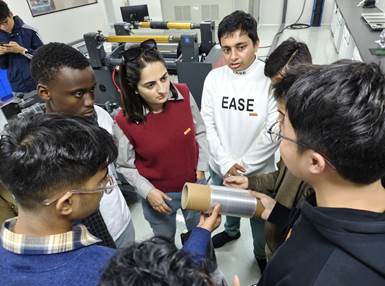
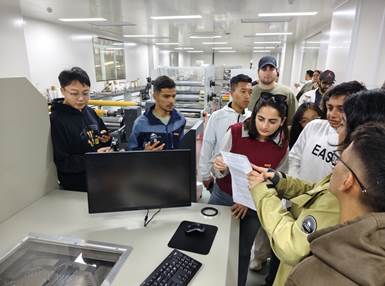
On the preparation display stands, die pressing, cold isostatic pressing, and sintering were presented in sequence, with corresponding samples illustrating the transformation of materials from raw inputs to finished products. Beside the dynamic and static testing systems, student presenters explained the principles and methods of mechanical strength testing. Their explanations made clear that engineering quality is supported by data and that material performance must be verified through experiments. A roll of transparent functional film drew the group closer for observation, and participants discussed it while reviewing the experimental data and display materials. The conversation shifted from the landscapes and brushwork of the morning to materials innovation, while their pursuit of new knowledge and respect for the discipline remained constant.
|
|
Students discuss the functional film and experimental data. |
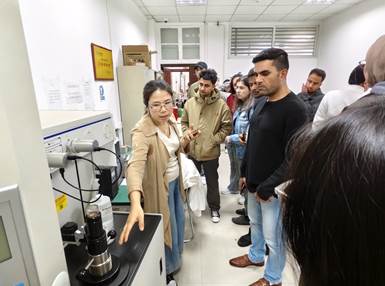
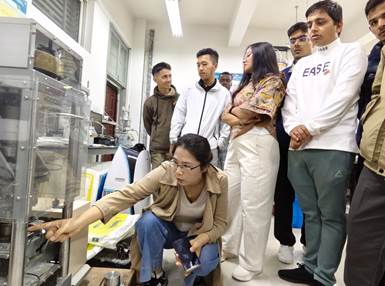
Throughout the visit, Ms. Ge of Wenzhou University accompanied the group and provided detailed explanations. When a component was positioned too low, she crouched down and pointed to each part as she explained its structure and function. The international faculty and students leaned in with her, determined not to miss any detail. From understanding the function of a single component to grasping the principles of a complete testing system, and then to understanding the logic of the entire experiment, her patient and meticulous approach embodied the rigor, practical orientation, and pursuit of excellence central to engineering.
|
|
Ms. Ge explains the experimental equipment to international students in detail. |
Through observation and discussion, international faculty and students gained a tangible sense of the momentum behind China's engineering disciplines and the ethos behind the rapid development of its infrastructure. Generations of engineers have remained true to their original aspirations, worked with care, and refined every detail with rigor and a practical approach, laying a solid foundation for major national projects.
A Mobile Classroom with Lasting Resonance
From the stone-paved lanes of Chan Street to the laboratory benches of the university, and from the thousand-year heritage recorded on the old city map to the rigorous inquiry conducted around scientific instruments, international faculty and students explored with focus throughout the day-long study tour, while Chinese and international young people engaged in sincere exchanges. Some pointed out features in the streets to share discoveries, others leaned in to learn how equipment worked, and still others crossed language barriers to exchange ideas. By observing, listening, thinking, and discussing together, they deepened mutual understanding and broadened their knowledge of China.
This mobile class on national conditions and ideological and political education in Wenzhou used culture as a bridge and academic disciplines as a medium. Through firsthand observation and personal experience, it enabled international faculty and students to appreciate the depth of fine traditional Chinese culture and the dynamism of scientific and technological innovation in Chinese engineering. It also helped them develop a grounded understanding of a real China with a long history and strong vitality.
A journey through Lucheng brought together past and present, while a shared experience of discovery connected Chinese and international voices. This Understanding China tour, which began in stone-paved streets, left international faculty and students with lasting memories of Wenzhou and planted seeds of mutual learning and friendly exchange. The understanding and sense of connection gained through the journey will continue to grow with Chinese and international young people and help China's stories reach a wider audience in a more vivid form.
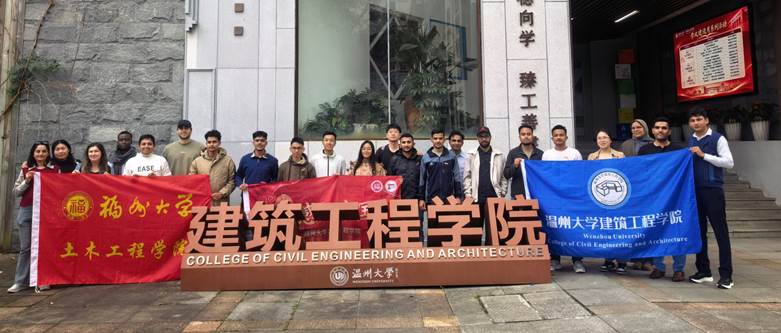
Faculty and students from the two colleges pose before the College of Civil Engineering and Architecture at Wenzhou University.


